Showing posts with label Jessica Norrie. Show all posts

Friday, 14 April 2017

Blogger Recognition Award ~ 6 years on

Well I've just gone passed my 6 year Blogiversary and I've been nominated for a Blogger Recognition Award! I was nominated by the Author of The Infinity Pool, Jessica Norrie. Check out her blog. I recently assisted her with some research for her up and coming new novel, recruiting some friends of mine from various ethnic backgrounds. So thank you Jessica, I was really touched by this. 

How and why did I start my blog?
I think it was world book night in 2011 that got me into blogging. I was chosen to give out the book "Fingersmith" by Sarah Waters. When I look back at that post, it makes me proud of how far I've come with my blogging. The post itself was basic, boring and lacking anything interesting. I'm surprised I managed to get any followers at all. I have learnt a lot over the past 6 years ago, mainly thanks to other bloggers. 


How is it going now? 
To date my blog has had over 150k views, although I only have 130 followers, but I'm okay with that. More would always be nice though. It's interesting that they are from all over the world. I do however have 470+ followers on Facebook and others on Twitter. That always puzzles me as my posts link through to my blog.

Most of my posts are obviously book and travel related, although mostly books at the moment. I hope to increase my travel posts. I have had other bloggers share posts on my blog too, which is always fun. 


I have met some amazing people through my blogging, ranging from fellow bloggers to Authors and Publishers. I love the blogging community.

What advice would I give to other bloggers?
1. Think about your post and re-read it before you post it. Does it make sense? Is it interesting?
2. Watch out for copyright if sharing images. It's not always easy to find out who they belong to, but if it says who owns it try and contact them for permission and credit them with the image. 

3. Choose a font that is easy to read for everyone. Also be aware of font colours. I myself for example, have a job to read red writing on certain backgrounds. Choose a background that's easy on the eye. 
4. Break up your posts with images. People switch off if you post just lots of text, if you haven't grabbed them in the first few sentences. 
5. Don't put pressure on yourself to be as articulate as other bloggers. Just be yourself and enjoy it. 
6. Keep in touch with the blogging community on social media. There's some great blogs out there! 

I would like to nominate a few of my favourite blogs too. The badges I've chosen have no copyright marks shown, so please notify me if they're yours! 


OK my blog choices are
:-


Random Things Through my Letterbox - Anne's blog is full of great book recommendations and reviews. Her reviews have cost me a lot of money in book purchases!

Being Anne - Books, Travel and Other Interesting Things. 


Trip Fiction - A blog that features books set in destinations all over the world. I've bought some great reads from their recommendations.

Going Crazy! Wanna Go? Janet is from Texas. She blogs about being a Mum, Weigh Loss and Depression and lots more. A brutally honest blog. 


Murder Down to a Tea - Rebecca is an ex police detective and gives tips on different aspects of policing for those who want to write a crime novel. She is also a crime author herself. She has some really interesting posts on her blog. 

To all of you, please keep blogging as I love following your blogs. Feel free to choose from either badge above if you accept the nomination. As I've said I can't find copyright for them. 

If you accept this nomination (and you don't have to):

  • Thank the blogger who nominated you and provide links to their blog.
  • Write a post to show you have the award and attach the logo to your post
  • Write a brief story of how your blog started
  • Give a piece of advice or two, to new bloggers
  • Select your choice of blogs you want to give the award to. There is no limit.
Comment on each blog and let them know you have nominated them. Please don't be offended if they decide not to mention it on their blog or make any awards of their own. It is entirely up to them what they put on their blog and it may not fit in with their plans. 

Thank you again to Jessica for my nomination! 

Saturday, 4 February 2017

Guest Travel Blog Post - Inspired by Happiness and Miss Flower ~ Jessica Norrie


Inspired by Miss Happiness and Miss Flower

This writing blog got diverted and may seem more like a travel blog, so let me, Japanese fashion, impose some order. (Travelling followers picked up recently, please do stay on board: I think our interests coincide.) Hiroshima was so striking I wanted to deal with it first, but now back to what I read to complement my trip.

Why did I go to Japan? My fascination arose from childhood, and a book called Miss Happiness and Miss Flower by Rumer Godden. A small girl receives a present of two Japanese dolls, and her cousin models a house for them to live in.

Of course it’s dated now. Girls may design and work with wood as much as boys; children, sadly, no longer go to the high street by themselves to find information at the bookshop (so few local bookshops remain, for one thing). But nevertheless it was a delight to reread, thirty or more years later, the night before leaving for Japan.


Geiko dancers on stage in Kyoto

Rumer Godden deals, with a light touch, on culture shock and homesickness and efforts by both sides to integrate. The children Nona and Tom understand the dolls need a home different from British homes, where the walls slide and discrete areas may be screened or opened up according to temporary considerations. Everything must be polite and ordered, and there is beauty in small, humble moments – one flower in a tiny vase, a scrap of silk for a pillow. The dolls have very human characteristics; Miss Happiness is optimistic and can accept hardship; Miss Flower is nervous, can’t believe a foreigner can understand her and is so grateful and gracious when the foreigner attempts to do so. In a bonus for those with a talent for carpentry, the book includes instructions on how to make a Japanese doll’s house.

Dolls and puppets are important in Japanese culture, and feature in the next novel I read. Junichiro Tanizaki is a classic Japanese author, and Some Prefer Nettles was published in 1928. I returned to Tanizaki after another absence of thirty years, having as a teenager adored his epic The Makioka Sisters, about a family of sisters living in Osaka (It’s comparable, perhaps, with Lorca’s House of Bernarda Alba, Chekhov’s Three Sisters and any number of green spined Virago Modern Classics. Or even Jane Austen).

I wasn’t disappointed. Here again was the clear prose; the economical, poetic images

conveying in one line as much as a page of Western description; psychology rendered through gestures, clothing, or choices of food and drink. Tanizaki’s characters think carefully about the design of every object they use, in order to enhance the experience in anticipation, during use, and and in memory. It’s a centuries old Japanese trait that continues today- think of Japanese technology, or think of a Zen garden.

In Some Prefer Nettles, a couple are preparing for divorce. There is no animosity between Kaname and Misako, they are simply tired of each other, but they have a child and an elderly father to consider. And so they proceed with care, with resignation, almost hoping to be denied the pleasure they seek, if it will help diminish the shock to the order of things. Meanwhile there are doll festivals and puppet theatre outings in which their situation is reflected through age old Japanese culture. (The puppets are life size and operated by up to three puppet masters at a time: I saw the one below at the theatre in Kyoto.)


The husband, Kaname, was brought up in old Tokyo “before the earthquake” (of 1923) and harks increasingly towards tradition; the wife seeks modernity but remains adept at selecting his kimonos and arranging flowers for the shrine. “He looked down on her, a sort of mute regret rising in him, without fear of meeting her eyes…..The early cherries were just coming into bloom.” It’s a beautiful, elegiac portrait of a society and a marriage, with a surprising number of echos for the contemporary Western reader.   

I considered reading Murakami, having found the same simple, limpid prose quality in Norwegian Wood, but felt I should explore a wider range of Japanese novelists and discovered Strange Weather in Tokyo by Hiromi Kawakami. Where Tanizaki told a story of modern marriage in a traditional society, this book, set in contemporary Tokyo, tells of timeless romance under modern conditions. A youngish woman meets her old teacher by chance, and he’s now retired and a widower. As with Tanizaki, you can open any page at random and be sure of finding elegiac, gentle prose, a yearning quality: the teacher’s name is Sensei and the narrator murmurs and repeats it just for the joy in the sound of the name. There’s the design commitment again: practical details investing everyday items with a touch of poetry. “The hot spiciness of the crackers really did go quite well with saké…I heard a faint chirping and then the sound of the leaves on the branches rustling for a moment, and then it was quiet again.” I suspect this simple beauty is a quality of the Japanese language, or it may be something that happens in the interface when Japanese is translated into English. But both novels – in which not a huge amount happens – are immensely clear, readable, universal and moving despite the significant cultural differences between us.

I read these two novels on my return. While I was in Japan, I read Motions and Moments, the third essay collection by Michael Pronko, an American professor who has made his home in Tokyo. At first I found these illuminating: as we moved around Tokyo I recognised quirks that he (affectionately) identifies. I was helped to understand certain customs through his intermediary insights; I enjoyed his descriptions of Japanese gardening (they use tiny secateurs like nail scissors to clip their shrubs with minute precision) and understood what he meant by getting lost in Tokyo “vertically as well as horizontally”. The first two parts of the book (Surfaces and Miniatures) were well written, witty and informative. Part 3, Constructs, could have used some editorial help with, er, construction (and I’m aware he acknowledges the help of Newsweek editors at the end). Perhaps by then I was too immersed in the spare beauty of Japanese expression to enjoy American verbosity and repetition. But it’s worth a read if you are going to Tokyo.


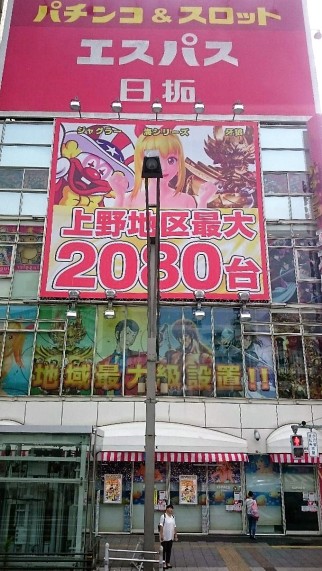
Tokyo street scene

© Jessica Norrie 2016


Follow Jessica's blog at - https://jessicanorrie.wordpress.com/

Thank you to Jessica for allowing me to publish this blog post onto my blog.